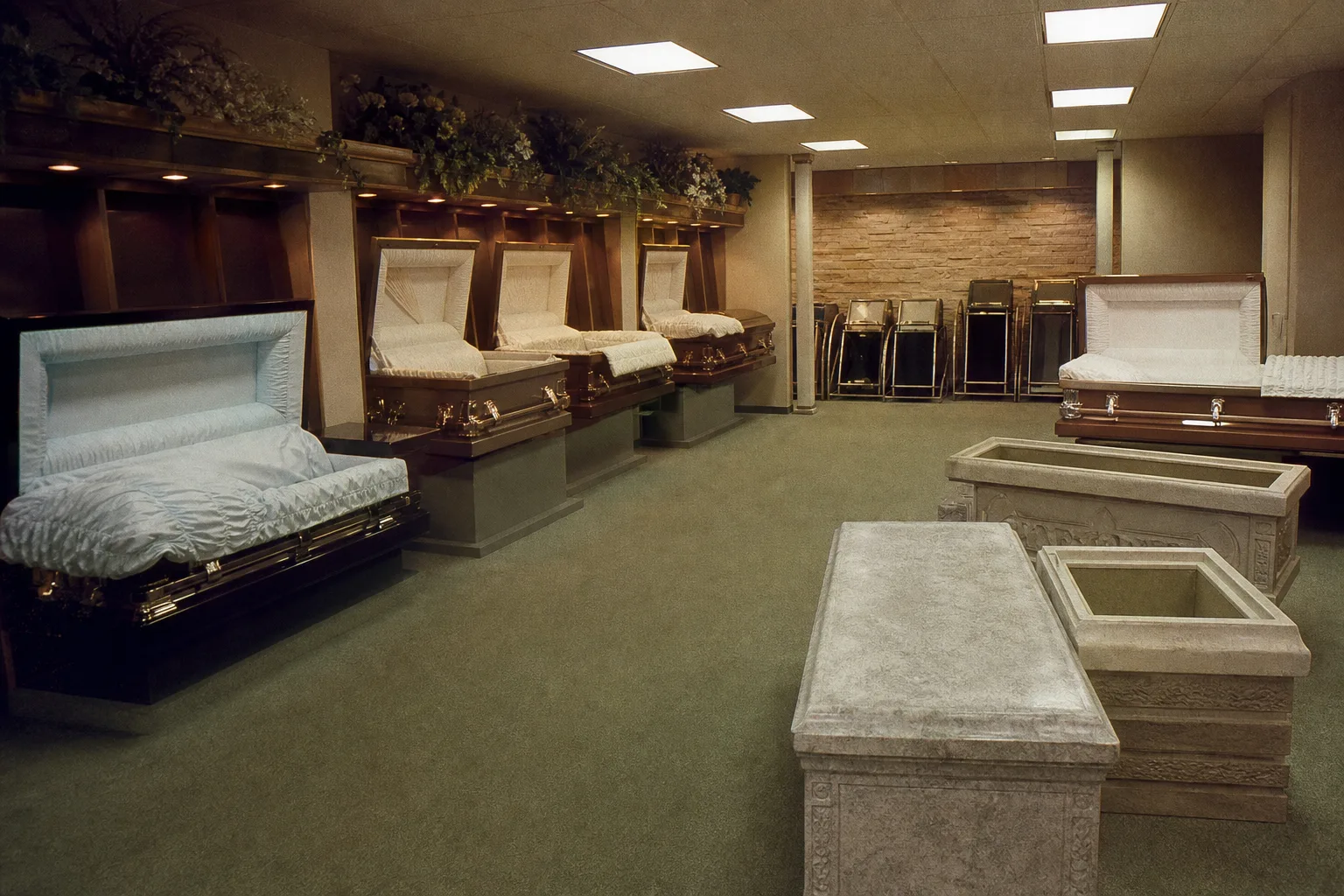
Cemeteries can require an outer burial container for grounds maintenance, but the specific brand, seal or upgrade is often house preference. Here is how to ask for the written rule.
Somewhere between the arrangement office and the cemetery gate, a phrase gets repeated until it sounds like law: the cemetery requires it. Sometimes that is exactly true and there is a printed rule to prove it. Sometimes it is a habit, a preference of the grounds crew, or a product tier that somebody would rather sell than not. The difference is worth real money, often more than a thousand dollars, and it is knowable in about ten minutes if you ask the right question of the right party. The right party is usually the cemetery, not the funeral home.
What the cemetery is actually protecting
An outer burial container is the box the casket goes into, set in the grave to keep the ground from sinking as the casket and the soil above it settle. Two versions exist in most price lists. A grave liner is a plain concrete shell, often with holes or an open bottom, sized to hold the earth up and nothing more. A burial vault is heavier, fully enclosed, sometimes lined with plastic or metal and sold with a warranty describing how long it resists water. The cemetery's interest ends at the first job. Level ground means safe mowing, straight rows, and no reopened grave after a wet spring.
That distinction is the whole argument. A cemetery has a legitimate operational reason to require some container, and many do, in writing, in the same rules that govern headstone size and planting. It has no operational reason to care whether the container is sealed, warranted, or finished in bronze, because none of that affects the turf. When a requirement is described to you, the useful follow-up is which job it serves.
The rule that exists on paper
Cemeteries operate under recorded rules and regulations, adopted by the board or the owner, given to lot holders when a plot is sold and available on request afterward. Ask for that document by name. A written requirement will read something like every grave shall be provided with an outer container of concrete or equivalent material, and it will not name a manufacturer or a model. If the office cannot produce a page, you are being told a preference. Preferences are not dishonest, necessarily; grounds crews develop opinions about what holds up in their soil. They are just not binding, and you may decline them.
Two more things belong in the same conversation. Ask whether the cemetery will accept a container you buy elsewhere and what it charges to set it, since the setting fee is separate from the container and is charged either way. Ask also whether any section of the grounds is designated for burial without a container, because a fair number of older cemeteries and nearly all natural burial grounds have one.
What the funeral home has to hand you
Federal disclosure requirements govern how funeral homes present prices, and the Federal Trade Commission is the agency responsible for that trade rule. In practice it means a general price list you keep, given at the start of any in-person discussion of arrangements, plus separate itemized lists for caskets and for outer burial containers, shown before the merchandise is shown. The container list carries a required line stating that state law does not usually mandate a vault, and that cemeteries may. That sentence is the one to read twice, because it draws the exact line this article is about.
The same rule lets you buy a casket or an outer container from a third party, a warehouse retailer, an online seller, a builder, without the funeral home charging a handling fee for accepting it and without being required to be present at delivery. You may also decline items you do not want and pay for the ones you do, rather than a package, though packages are permitted and sometimes cheaper. Read the itemized column before agreeing to the bundle.
Comparing what you are told to what you are shown
Set the two documents side by side. The cemetery's written rule tells you the category: container required, or not, and of what material. The funeral home's container price list tells you the range within that category, from a basic liner near the bottom to a sealed vault several times the price. Anything asserted verbally that appears in neither document is a suggestion. A careful reader ends up buying the least expensive item that satisfies the printed requirement, or a nicer one on purpose, knowing which is which.
Ask for the page. People hand it over.